
SEO, AEO, and GEO. These are acronyms that get tossed around whenever people talk about digital marketing today. Sometimes they seem to mean the same thing, and other times their meaning is totally unclear or confusing.
Each, however, serves a distinct purpose. And for small law firms, knowing how to use them isn’t just helpful – it’s a competitive advantage against firms with bigger budgets and bigger names.
Fortunately, you don’t need to become a tech wizard or hire a team of specialists to adapt. The fundamentals of attracting clients online are actually becoming more aligned with what you already do best: demonstrating expertise, building trust, and providing genuine value. The tools are just evolving, and we are here to help you capitalize on them.
Let’s break down what each of these optimization strategies means and why they matter for your law firm’s online marketing efforts.
SEO: The Foundation You Already Know (and Still Need)
Search Engine Optimization (SEO) is the original strategy for getting found online. For nearly three decades, it’s been the gold standard for digital visibility. When someone types “personal injury lawyer near me” into Google, SEO is what determines which firms appear on that first page of blue links.
Traditional SEO focuses on keywords and rankings. You optimize your website to match what people type into search engines and structure your content to help search algorithms understand what you offer. When it works, it works beautifully – you show up as a blue link, someone clicks through to your site, and hopefully becomes a client.
SEO isn’t going anywhere. Google still processes billions of searches daily, and the company just reported its first $100 billion quarter, driven largely by search and ads. For law firms, particularly those targeting high-intent local searches, SEO remains the primary pipeline for qualified leads. But (and this is a significant but!) the way people search is fundamentally changing, and that poses challenges to SEO’s prominence.
Why Traditional SEO Isn’t Enough Anymore: The Fundamental Shift
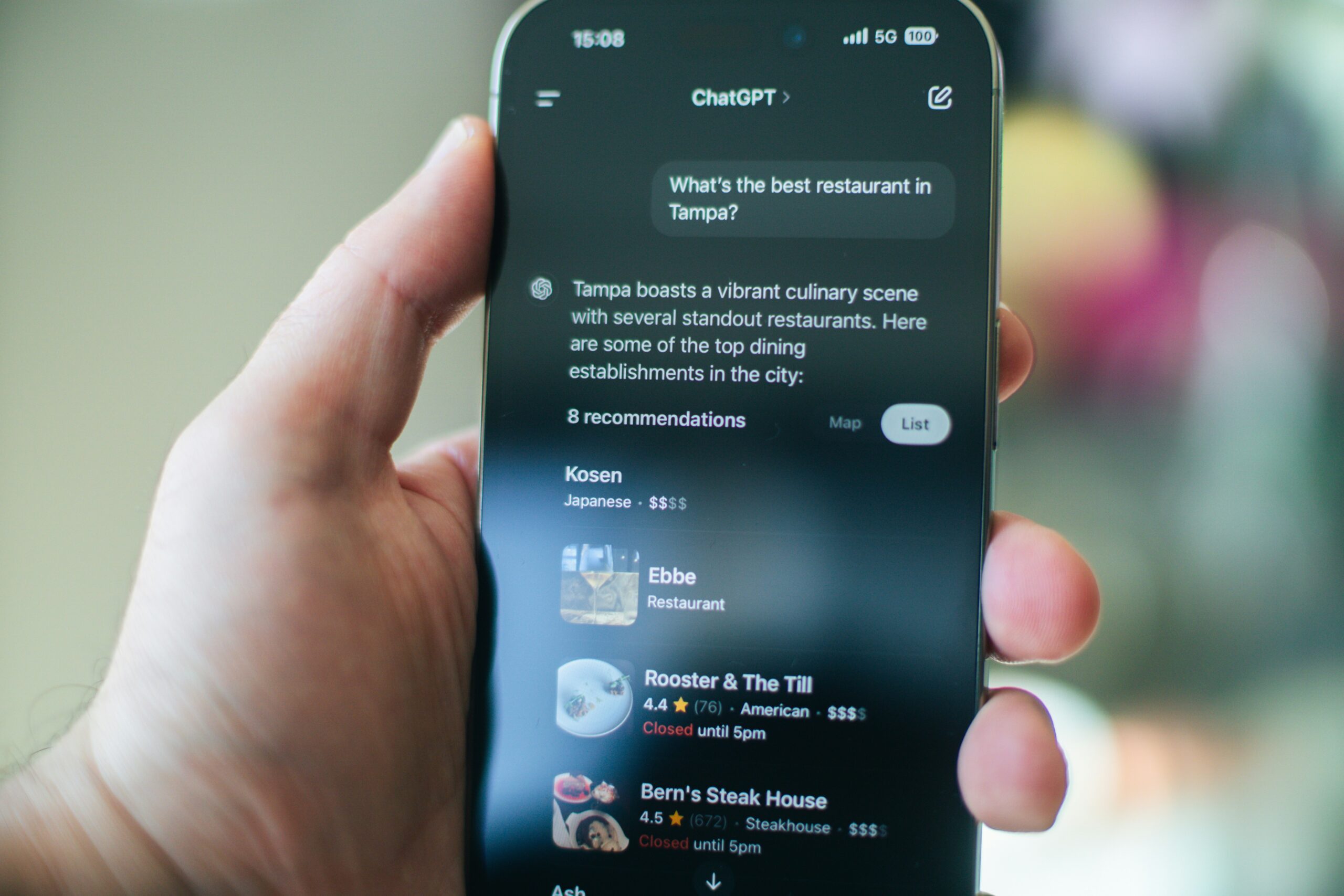
Picture this: A potential client is worried about their upcoming divorce. A year ago, they would have typed “divorce attorney Chicago” into Google, scrolled through results, and clicked on a few websites to learn more. Today? They might ask ChatGPT, “What should I consider when choosing a divorce lawyer in Chicago?” and get a comprehensive, conversational answer without ever clicking a single link. This situation refers to what’s known as zero-click searches.
Zero-click searches account for roughly 65% of all Google searches, and it’s caused in large part by the rise of AI systems. For example, Sam Altman of OpenAI announced in October 2025 that weekly ChatGPT active users doubled in size from 400 million to 800 million in an impressive 9-month period (February to October 2025). AI search provides direct answers for users, meaning they don’t need to click on links to find answers themselves. And 65% of all Google searches ending in zero-clicks will likely increase – Gartner, a global research and advisory firm, predicts that traditional search engine volume will drop by 25% in 2026.
The point is simple: Traditional search remains relevant, but AI systems are rapidly becoming more popular because users want quick, direct answers.
For law firms, this creates both a challenge and an opportunity. The firms that adapt will capture a new generation of clients; those that don’t risk becoming invisible to a fast-growing segment of searchers.
The fundamental question is shifting from “How do I rank higher?” to “How do I become the answer?” And that’s where AEO and GEO come in.
Answer Engine Optimization (AEO): Becoming the Trusted Answer
Answer Engine Optimization (AEO) is the practice of structuring your content so that search platforms and AI systems can directly provide answers to user queries. When done right, AEO helps position your content as an answer to specific questions.
Think of it this way: SEO helps people find your website. AEO helps AI systems cite your firm as the trusted authority. In a world where users increasingly expect direct answers, being the source recommended by AI platforms can be incredibly powerful.
AEO applies across several key platforms, including but not limited to:
- Google’s AI Overviews (AIO) (synthesized answers that appear above traditional search results)
- AI chatbots (e.g., ChatGPT, Claude AI, Gemini, and Perplexity)
- Voice assistants (e.g., Siri and Alexa – the content that gets read aloud comes from sources optimized for answer engines)
- Featured snippets (direct quotes from websites and the primary data source for voice assistants)
AEO matters across all search platforms, but it’s especially critical for voice search – a market that is booming. Voice commerce alone is expected to top $80 billion by the end of 2026.
Here’s why AEO and voice go hand in hand: when someone asks Siri, Alexa, or another voice assistant a question, the assistant doesn’t read off a list of links. It gives one answer. That answer usually comes from a featured snippet—the kind of concise, direct content you want on your website.
For law firm content, FAQ sections and practice area pages are prime snippet opportunities – they naturally lend themselves to the question-and-answer format.
Let’s imagine another scenario: Someone’s just been in a car accident, and they’re sitting in the hospital waiting room, worrying about how they can pay for everything. They grab their smartphone and ask the voice assistant, “What are the next steps to get compensation for my injuries?” Your goal is to be the source for the answer.
What Makes Content AEO-Friendly?
AEO is a significant shift from traditional SEO. You need to move beyond writing long articles where the answer is buried deep down. With AEO, your content must deliver immediate, standalone value because answer engines grab specific bits to build their response. Here are a few tips:
- Lead with the answer. AI systems pull from content that gets to the point quickly. When it makes sense, use a Q&A format—it mirrors how people actually search.
- Structure matters. Use headings that reflect real search queries, break things into digestible chunks, and define terms clearly. Precision helps AI understand your content.
- Build trust. Cite sources, keep information accurate and current, and show your expertise. AI favors authoritative voices.
- Write like people talk. Match the natural language of your audience’s questions and weave in related terms and concepts.
- Make it quotable. Craft sentences that can stand alone as complete answers. Don’t bury the good stuff in long paragraphs.
For law firms, a good example is a FAQ section. FAQ are designed to directly answer questions potential clients actually ask, like:
- How long do I have to file a personal injury claim in [state]?
- What documents do I need for a divorce filing?
- How much does it cost to hire a criminal defense attorney?
The key is providing authoritative, accurate answers in a format that’s easy for both humans and AI to understand.
Generative Engine Optimization (GEO): The New Frontier
Though AEO and GEO have been, and likely will continue to be, used interchangeably, distinct meanings have gradually emerged over the past year.
Generative Engine Optimization (GEO) goes a step further than AEO. AEO focuses broadly on any platform that provides direct answers, but GEO specifically targets optimization for generative AI platforms—tools like ChatGPT, Perplexity, Claude, and Google Gemini—that synthesize responses from multiple sources into comprehensive, conversational answers.
The important distinction is this: traditional search engines act like librarians, pointing you to sources, while generative engines act like consultants, synthesizing information from multiple sources into a direct answer.
When an AI, such as ChatGPT, is asked for recommendations on selecting a family law attorney, its response goes beyond a simple list of websites. It offers guidance, outlines important considerations, and may even mention or recommend specific law firms. Being cited in these AI responses is more likely if your content is structured in a way that AI systems deem authoritative and trustworthy.
Why GEO Matters for Law Firms
The data on GEO is rather fascinating. According to McKinsey & Company, 44% of search users now consider generative AI their primary source of insight. Only 31% still rely most on traditional search. That’s a striking shift considering generative AI search has only been around a few years, while traditional search has had decades to entrench itself.
But here’s what’s even more interesting: People aren’t just preferring generative AI search – they are more likely to take action after using it.
The SEO software company Ahrefs reports that AI-driven traffic makes up less than 1% of its overall website visits. Sounds negligible, right? But they point out it’s their highest-converting channel. Users who click through from AI recommendations have already done their homework. They’re not browsing – they’re ready to decide.
Think about what this means for a law firm: someone asking ChatGPT about estate planning attorneys isn’t casually browsing – they’re actively seeking help. If the AI mentions your firm as a trusted option, that’s essentially a warm referral from a source they already trust. The volume may be small now, but the conversion potential is remarkable for the near future.
SEO vs. AEO vs. GEO: A Side-by-Side Comparison
Understanding the key differences between these approaches helps you develop a comprehensive strategy. Here’s how they compare:
| Factor | SEO | AEO | GEO |
| Primary Goal | Rank higher in search results (blue links) | Become the direct answer in featured snippets & voice | Get cited by AI chatbots like ChatGPT & Perplexity |
| Success Metric | Rankings, organic traffic, clicks | Featured snippet appearances, voice search visibility | AI citations, brand mentions, recommendation rate |
| Content Format | Comprehensive, keyword-rich pages | Direct Q&A format, structured answers | Authoritative, citation-ready, entity-clear |
| User Interaction | Click through to website | Often zero-click (answer shown directly) | Conversational; may or may not click through |
| Key Technical Element | Keywords, backlinks, site structure | Schema markup, FAQ structure, concise answers | Entity optimization, brand authority, content freshness |
| Traffic Volume | High (still majority of search traffic) | Medium (growing with voice adoption) | Low but rapidly growing |
| Conversion Quality | Good (14.6% conversion rate) | Very good (pre-qualified visitors) | Excellent (10%+ conversion rates reported) |
The Key Takeaway: They Work Together
Here’s what makes this shift exciting rather than overwhelming: SEO, AEO, and GEO aren’t competing strategies. They’re complementary layers that reinforce each other. Strong SEO fundamentals actually improve your AEO and GEO performance, and vice versa.
Think of it like this:
- SEO is your foundation. It ensures your website is technically sound, your content is discoverable, and you have the authority signals that search engines and AI systems both value.
- AEO builds on that foundation by structuring your content to be answer-ready—useful for featured snippets, voice search, and AI overviews.
- GEO adds the finishing touches, ensuring your brand has the kind of clear identity and authoritative presence that generative AI systems recognize and recommend.
But there is one caveat. This process is just that: a process. Results won’t materialize overnight – it’s gradual. If you commit to a plan, just small steps day-by-day, week-by-week, you’ll see the results soon enough.
What This Means for Solo Attorneys and Small Firms
If you’re a solo attorney or running a small firm, you might be wondering whether all this matters to you. The answer is an emphatic yes—and here’s why this shift might actually work in your favor.
The old SEO game often favored bigger firms with bigger budgets. They could produce more content, build more backlinks, and outspend smaller competitors. But AI systems don’t care about size; they care about relevance, authority, and trustworthiness.
A solo practitioner who has developed genuine expertise in a specific niche (say, employment law for healthcare workers or estate planning for small business owners) can absolutely be recognized by AI systems as the authoritative voice in that space. Deep specialization and genuine expertise are exactly what AI systems are designed to surface.
Local SEO also remains a great equalizer. Small firms that have optimized their Google Business Profile, earned positive reviews, and created content specific to their community can compete effectively for local AI mentions. When someone asks ChatGPT about “the best immigration lawyers in Austin,” the AI pulls from various sources, and a well-positioned small firm absolutely can be part of that conversation.
Tip: In addition to a robust presence on Google Business Profile, you should also consider establishing and maintaining a business profile on Bing Places for Business. Microsoft’s Bing search engine is quickly evolving and is powered by OpenAI’s large language models.
Looking Ahead: Your Next Steps
The search landscape is evolving, and that’s genuinely exciting news for law firms willing to adapt. The shift toward AI-powered search isn’t something to fear—it’s an opportunity.
Start with the basics: ensure your website is technically sound, your content genuinely answers client questions, and your firm’s identity is clear and consistent across the web. From there, you can layer in more advanced tactics as you grow comfortable with the new landscape.
The firms that will thrive in 2026 and beyond aren’t necessarily the biggest or the most tech-savvy. They’re the ones that understand a simple truth: in an age of AI search, being genuinely helpful, clearly authoritative, and consistently trustworthy is the best optimization strategy of all.
