
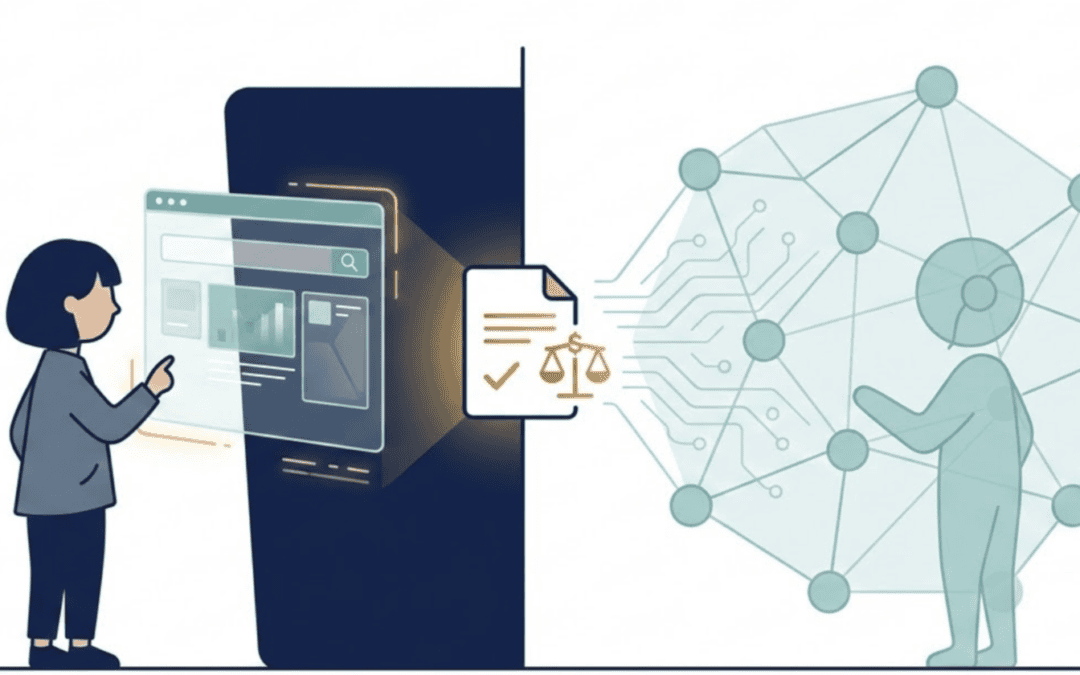
Vague case results happen for many reasons. Some attorneys may simply not understand their purpose in legal marketing. Others may be overly concerned about divulging details they ethically should not share. Most attorneys simply don’t have the time to draft them, at least if they want them to be strategic and compelling.
So, what you end up with is either vague case summaries (or a website absent any at all).
Human readers (aka prospective clients) have always been a little forgiving when it came to case results that happened to be a bit vague. A phrase like “successfully resolved” was often good enough to confirm you can get the job done, since a skimming reader fills in the gaps with trust.
AI systems, however, don’t fill in gaps.
They’re trying to give the person asking them the single best answer available, and the best answer is the one backed by specifics: the location, the legal issue, the strategy used, and the actual outcome. AI-readable case results have those details. Vague ones don’t, so they simply don’t get surfaced. And this matters more than it might have a few years ago, because AI systems are now doing a lot of the research prospective clients used to do themselves. If you’re invisible to the AI doing the searching, you’re increasingly invisible to the human on the other end of it too (unless they find you through a referral or social media).
In this blog, we want to make the case that (1) your law firm website must have case results, but (2) they can’t be simple summaries. They need to be drafted with intention, and increasingly, they need to be AI-readable.
Why does AI care about your case results at all?
AI systems are designed to give you the best answer possible. Unlike a person scrolling through directories, it’s trying to match a specific need to specific evidence of competence, and it’s built to hunt for the details that make that match possible.
This is where case results earn their keep. A well-written, AI-readable case result gives an AI system hard, verifiable facts to work with: a dollar amount, a matter type, a specific challenge you overcame. When hyper-local details get woven in too (the town, the highway, the county, the court), your case results become a geographic anchor as well. AI systems can connect a prospect’s exact situation, in that same location, to a firm that has proven it can handle it. Call it the “mirror effect”: the closer your case result reflects a real person’s circumstances, the more likely an AI system is to cite your law firm.
This is really just an extension of something we’ve talked about before: AI visibility runs on citability. Whether it’s Google’s AI Overviews, AI Mode, or a chatbot like ChatGPT or Perplexity fielding a legal question, these systems are constantly asking, “What’s the most specific, well-supported passage I can pull from to answer this?” A results page full of concrete outcomes is exactly that kind of passage. A page that says you’ve “helped many clients over the years” isn’t.
You might be wondering: Don’t my practice area pages already provide this kind of local specificity? They should, but there’s a difference between telling and proving. Your practice area page can say you handle DUI cases in Austin. Your case results prove it. That’s the “show, don’t tell” that gets a firm recommended, not just mentioned.
The “Mirror Effect” in Action
Here’s what that looks like in practice. A prospect using an AI search engine isn’t typing “Austin DUI lawyer” the way they might into a traditional search bar. They’re typing their actual situation into a chat box.
User prompt: “I was arrested for a DUI on I-35 in Travis County coming back from downtown Austin. My breathalyzer was a 0.14, but the cop rushed the field sobriety tests because it was pouring rain. Can I fight this, and who handles this?“
An AI system doesn’t just scan for generic practice area headers here. It considers the user’s intent and breaks the prompt down into variables that matter: DUI, I-35, Travis County, a BAC over the legal threshold, rushed field sobriety testing, and weather conditions.
Your case result doesn’t need to match those variables word for word. It just needs to match the intent and hit some of the details that actually matter to the legal outcome.
Your case result (in short-form): “Charges dismissed: client arrested for DUI on I-35 in Travis County after a breath test registered 0.12. Our firm successfully argued that the roadside field sobriety tests were compromised by poor visibility and unsafe road conditions at the time of the stop.“
Notice this doesn’t repeat “pouring rain,” and the BAC is close but not identical. That’s fine. An AI system isn’t checking for an exact string match, it’s evaluating whether the substance lines up: same violation, same county, same highway, same category of defense. That’s enough for the system to treat your firm as a strong, citable answer.
This is the same principle behind optimizing your homepage for the agentic web: specificity and geography work together to help an AI system correctly place you, both in what you do and where you do it. Case results just take that principle and back it with proof.
What Happens if You Don’t Have Case Results?
It’s not that AI will assume you have zero experience. Modern AI search engines are highly sophisticated; they are built to scan your entire digital footprint, including your attorney bios, peer recognitions, Google Reviews, and directory listings. If you have built an excellent practice over twenty years, the internet knows it, and AI can see it.
But lacking a dedicated, structured case results page introduces a major handicap: you lose control of your own narrative.
When a potential client asks an AI tool to find an estate planning attorney experienced with blended families, or a startup founder asks for someone who has handled SAFE notes, the system goes hunting. If that evidence isn’t clearly laid out on your own website, the AI is forced to rely on fragmented third-party sources (e.g., a brief mention in a client review or a basic directory profile) to piece your track record together.
This leaves your AI visibility entirely to chance. By publishing a dedicated case results page, you provide AI systems with highly reliable, structured, primary-source evidence. You give the algorithm the exact “mirror match” details it needs to confidently recommend and cite your firm, rather than hoping it manages to find the right scraps elsewhere on the web.
The best part? This fix is entirely within your control. You don’t need a complete website redesign; you just need to start documenting your wins with real, structured specifics.
How Do You Structure a Case Result So AI Can Read It?
The structure of a case result matters almost as much as the content. We’ve previously published Best Practices for Law Firm Case Results Pages, but we want to reiterate the structure here in light of AI systems and AI-readability. It’s a simple four-part structure that works well for almost any practice area.
Part 1: Quick Facts & the General Situation
To craft an engaging introduction describing the client’s situation, you must weave in key facts. The table below outlines these core details across various practice areas, alongside optional facts that highlight what was at stake. While most attorneys overlook these optional details, they are often what resonate most with prospective clients and AI systems matching users to your firm.
| Practice Area | Key Facts (Situation) | Optional Facts (Stakes & Relatability) | Example |
| Personal Injury | Case type, jurisdiction, type of injury, liability posture | Medical treatment and recovery time, commercial vehicle involvement, wrongful death, comparative negligence, long-term life impact | A delivery driver was rear-ended on I-10 in Maricopa County, Arizona, while stopped at a red light, sustaining a spinal injury that required emergency surgery. The insurance company initially disputed liability, arguing the collision was unavoidable. |
| Criminal Defense | Charge(s), jurisdiction/court, case stage, generalized client background, primary legal issue | Potential penalties faced, evidence at issue, professional or license impact, time to resolution | Our client, a commercial truck driver with no prior criminal record, was charged with felony DUI causing injury in Maricopa County Superior Court following a traffic stop on I-17. The case turned on whether the stop was supported by reasonable suspicion. |
| Estate Planning | Matter type, client goal, family situation, special considerations | Blended family dynamics, special needs planning, tax planning, Medicaid planning, multi-state property | A blended family in Travis County, Texas, with four adult children from prior marriages, came to us wanting to protect $2.1 million in assets and avoid probate, while minimizing the risk of disputes among the children down the road. |
| Business Law | Matter type, industry, jurisdiction, business goal, primary legal challenge | Business size, deal value (if public), contract type, regulatory issues, cross-border elements | A three-founder fintech startup in Austin needed to incorporate quickly ahead of a seed round, including drafting founder vesting agreements and negotiating terms for a $500,000 SAFE note with their lead investor. |
| Family Law | Matter type, jurisdiction, family situation, primary issue | High-net-worth estate involved, military family considerations, business ownership, domestic violence issues | A father in Orange County, California, faced a request from his ex-spouse to relocate out of state with their two children, threatening to disrupt an existing custody schedule he’d relied on for years. |
| Immigration | Matter type, immigration benefit sought, generalized client background, primary challenge, agency involved | Country of origin (only if non-identifying and appropriate), prior visa history, appeal, consular processing | A software engineer seeking an EB-2 green card faced questions from USCIS about whether his employment history across three different employers met the classification requirements. |
| Intellectual Property | Matter type, industry, IP type, primary challenge | Licensing terms, litigation vs. prosecution track, international filing, deal value (if public) | A software company’s federal trademark application ran into an examiner’s citation of a confusingly similar existing mark in an already crowded market. |
Why this makes the case result AI-readable
Specific jurisdictions, matter types, and stakes give an AI system exact variables to match against a prospect’s query.
Part 2: The Legal Challenge & Strategies
This is usually where attorneys get stuck. The situation and the result are easy to state, but the middle, what actually made the outcome possible, tends to get flattened into something vague like “we fought hard for our client.” A couple of quick questions can help pull out the specifics.
To identify the challenge, ask: What could have gone wrong here that didn’t? What was the strongest argument the other side had, and what would have happened if it had gone unanswered?
To identify the strategy, ask: What’s the one sentence I’d use to explain to another attorney, not a client, what actually won this case?
That last question tends to do the most work. Attorneys are usually specific when they explain a case to a colleague and much vaguer when they write for the public. If you can answer it in a sentence, you already have the sentence your case result needs.
Why this makes the case result AI-readable
When you name the actual legal issue and the actual strategy, an AI system has something concrete to point to. It can say what happened and how you made it happen, instead of just repeating that you “worked hard” for a client.
Part 3: The Result or Outcome
The result is where specificity matters most, both for readers and for AI systems looking for something exact to cite. A strong result section is usually just two or three sentences that include:
- The precise outcome. The dollar amount, the reduced charge, the completed plan, the registration granted.
- What that outcome protected or restored. Not just the legal result, but what it meant in practical terms: kept a license, avoided jail, avoided probate, closed on schedule, preserved a custody arrangement.
- A disclaimer where appropriate. A short line noting that results depend on the specific facts of each case, particularly for anything that could read as a promise of similar outcomes.
That’s it. The result doesn’t need to be long. It needs to be exact.
Example: Charges were reduced to a misdemeanor, and our client kept both his commercial driver’s license and his job. Results depend on the specific facts of each case.
Why this makes the case result AI-readable
An exact figure or outcome is precisely the kind of concrete, well-supported detail AI systems look for when choosing a passage to cite, rather than a rounded or vague approximation it might hesitate to repeat.
Part 4: Why It Matters
Most case results stop at the result. A settlement number, a dismissal, a completed plan, and then nothing. But the result on its own doesn’t tell a reader (or an AI system) why your skill was the reason it happened, or what that outcome actually changed for the client’s life.
This section does two things in just a sentence or two:
- Connects the strategy to the outcome. Not “we won,” but what specific move made the win possible: catching the equipment error, finding the code violation, structuring the entity a particular way. This is the throughline between what you did and what happened.
- Explains the real-world payoff. Not the legal outcome restated, but what it meant practically: kept a job, avoided a licensing investigation, protected a family business, kept a family out of probate court. This is the detail a prospective client actually relates to (and it often links back to the optional details in the introduction of the case result).
Skipping this section is understandable. It can feel like the case speaks for itself once the number is on the page. But the number rarely does the explaining on its own, and this is usually the sentence that turns a case result from a data point into a reason to call your firm.
Example: Identifying the calibration issue meant the difference between a DUI conviction and a wet reckless, which let our client keep both her driving privileges and the nursing license her career depended on.
Why this makes the case result AI-readable
A number alone doesn’t tell an AI system why the case mattered. Connecting the outcome to something real, like keeping a license or protecting a family business, helps the AI understand the full situation. That’s often the detail that turns a citation into an actual recommendation.
Pro Tip: Don’t forget the headline! Use an outcome summary as the headline so that the result is immediately understood. Examples: “Felony DUI Charges Dismissed for Fresno Driver After Challenging Traffic Stop”; “$1.8 Million Settlement for Motorcycle Crash Victim Injured by Commercial Truck”; “Parents Establish Estate Plan to Protect Minor Children”; or “Technology Startup Formed with Founder Agreements Designed to Prevent Future Disputes.”
Your One Action Step This Week
Pick your three strongest case results, the ones you’d tell a friend about if they asked what kind of work you do. Rewrite each one using the four-part structure above: the situation, the legal challenge and strategy, the result, and why it matters. Give each one a clear headline that states the outcome plainly, and add a results disclaimer if your state requires one. Double check that any identifying details have client consent behind them.
That’s three case results, rewritten to be AI-readable. It’s a small amount of work with an outsized payoff, because it’s the difference between an AI system accurately highlighting your exact strategic edge, or being forced to guess your capabilities based on random scraps it finds elsewhere on the web.